

THE ARGUMENT IN BRIEF
Many marketing AI proposals move faster than the data and permissions they depend on. Anil asks leaders to test the reliability, ownership and purpose of their data before scaling AI use cases.
The Great Indian AI Gold Rush (and Why Most are Mining Fool's Gold)
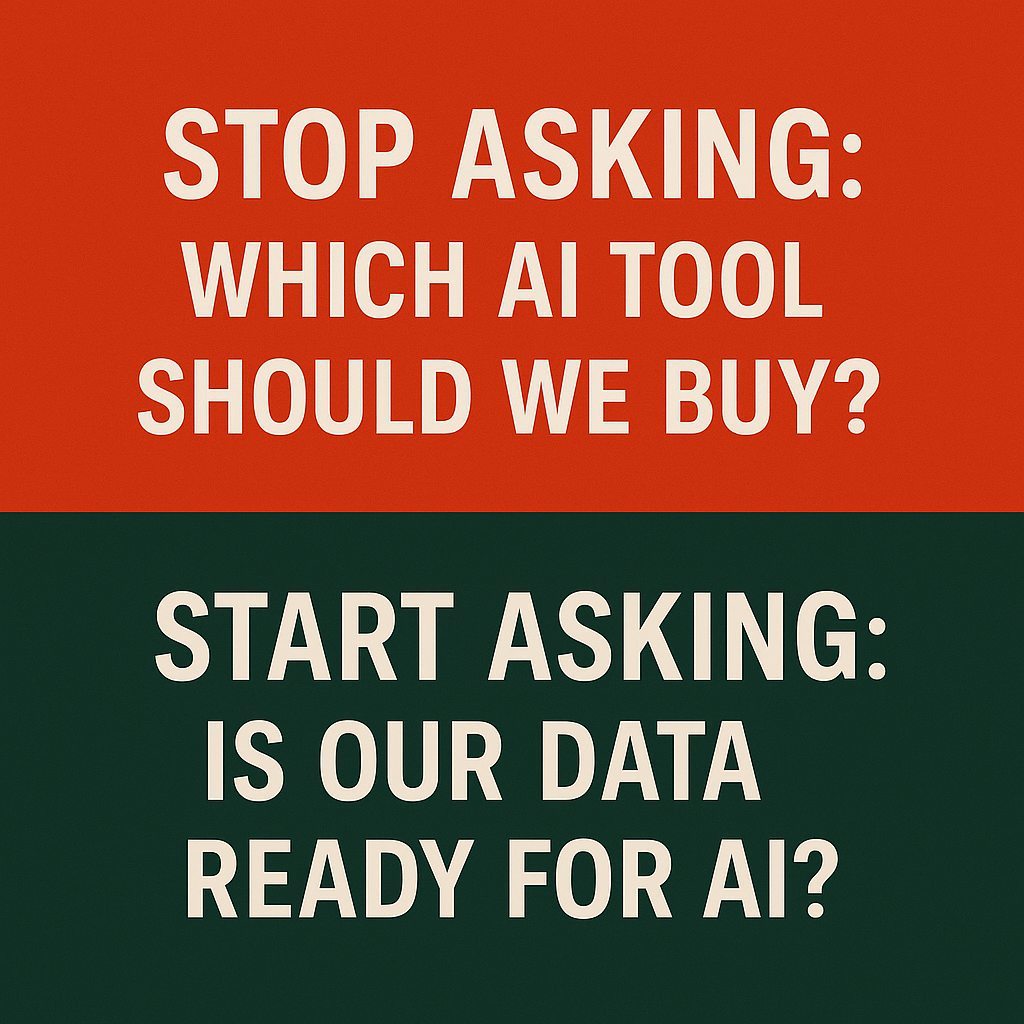
Walk into any marketing conference in India today, and you'll hear the same symphony: "ChatGPT for campaigns," "AI-powered personalisation," "Generative AI for creative." LinkedIn feeds overflow with posts about the latest AI tool discoveries. Agency pitches boast about their AI capabilities. CMOs measure success by the number of AI solutions they've implemented.
But here's what nobody is talking about in those glossy presentations:
The FMCG Paradox: One of India's fastest-growing FMCG giants spent months implementing an AI-powered consumer insights platform, only to discover that their customer data was spread across 47 different systems, with no unified customer ID, and of such poor quality that the AI was essentially making sophisticated predictions based on flawed data. The result? ₹2 crore investment, zero actionable insights.
The Agency Awakening: A leading Mumbai-based creative agency proudly launched their "AI-first" offering, promising personalised content at scale. Within three months, they realised their clients' data was so fragmented and inconsistent that their AI was creating personalised messages for "Unknown User" more often than actual customers.
The E-commerce Embarrassment: India's third-largest e-commerce platform implemented advanced machine learning for recommendation engines, only to find that 40% of their product catalogue had incomplete or incorrect data, leading to AI recommendations that were not just irrelevant but sometimes offensive.
These aren't isolated incidents. They're symptoms of a systemic delusion sweeping through Indian marketing: the belief that superior algorithms can compensate for inferior data strategy.
The Privacy Paradox
With India's Digital Personal Data Protection Act coming into force, 78% of organisations cite inability to access data due to privacy-related issues as a key marketing challenge. Yet most are implementing AI solutions without proper consent management or data lineage tracking.
Now, imagine feeding this chaotic, incomplete, inaccurate data diet to your shiny new AI system. You're not getting artificial intelligence; you're getting artificial ignorance at scale.
The Five Pillars of Data-First AI Success
I've identified five non-negotiable pillars for successful AI implementation. Skip any one of these, and your AI investment becomes an expensive experiment in organisational frustration.
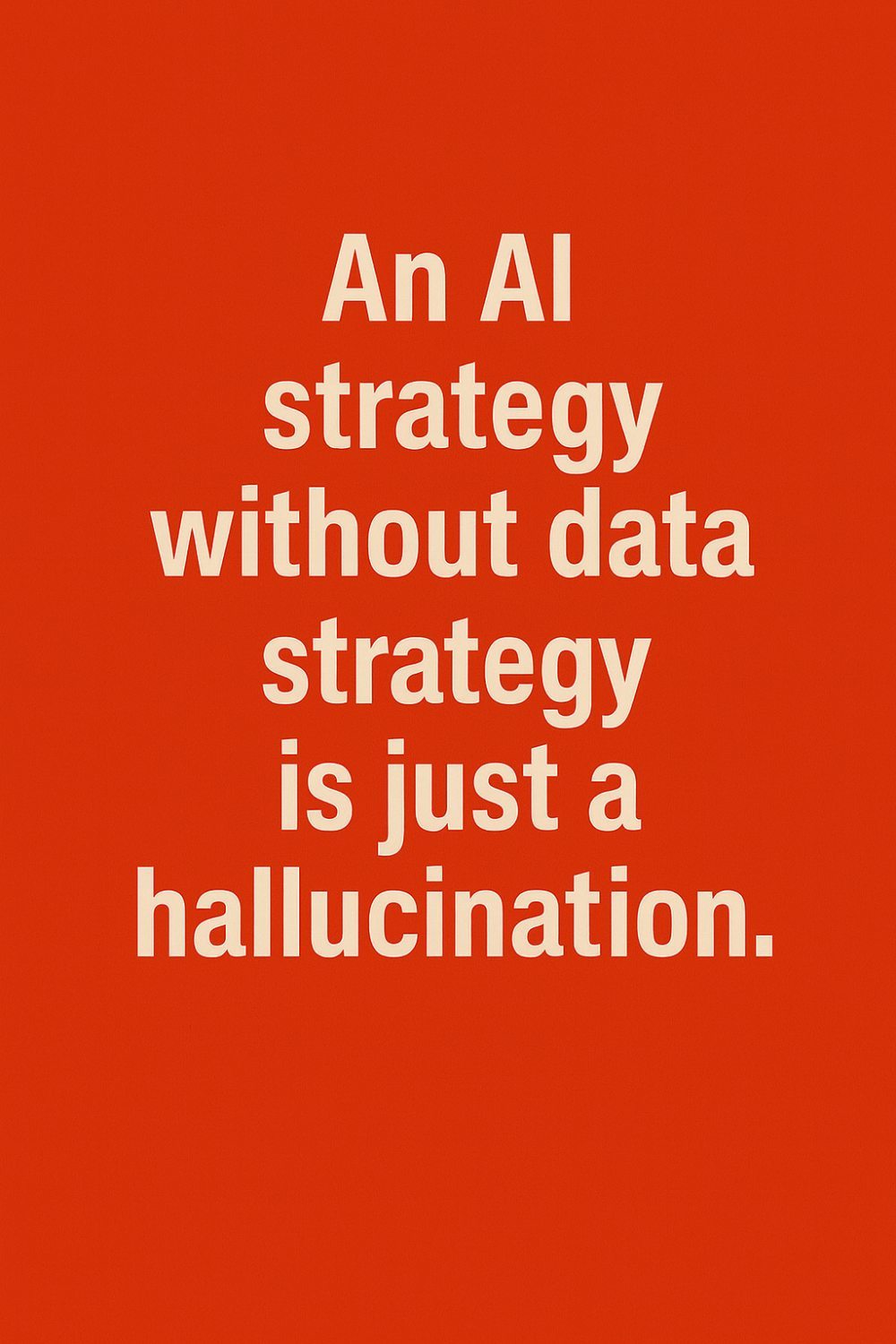
Pillar 1: Data Inventory and Architecture Audit
The Brutal Truth: Most organisations don't know what data they have, where it lives, or whether it's any good.
The Indian Reality: A leading Mumbai-based automotive company discovered they had 127 different definitions of "customer lifetime value" across their various systems. Their AI was essentially trying to optimise for 127 different success metrics simultaneously.
What You Must Do:
Conduct a comprehensive data inventory across every touchpoint
Map data flows between systems
Identify data owners and stewards
Document data lineage and transformation logic
Assess data quality, completeness, and accuracy
Create a unified data dictionary
The Consultant's Warning: If you can't answer "What data do I have?" with confidence, stop reading AI tool reviews and start here.
Pillar 2: Data Governance and Privacy Framework
The Brutal Truth: Data governance isn't sexy, but it's the difference between AI success and AI scandal.
The Indian Context: Stringent data governance policies are essential, requiring implementation of data protection policies like DPDP,GDPR and CCPA, along with cybersecurity measures like encryption and secure payment gateways. Yet most Indian companies are treating privacy compliance as a checkbox rather than a competitive advantage.
What You Must Do:
Establish clear data ownership and accountability
Implement consent management across all touchpoints
Create data retention and deletion policies
Build audit trails for all data usage
Train teams on privacy-by-design principles
Develop incident response protocols
The APAC Advantage: Singapore and Hong Kong-based companies are already using privacy compliance as a competitive differentiator. Indian companies that get this right will dominate their markets.
Pillar 3: Data Quality and Standardisation
The Brutal Truth: Your AI is only as smart as your dumbest data point.
The Real-World Reality: A Chennai-based financial services company's AI chatbot consistently directed customers to the wrong investment products because their product master data had over 3,000 duplicate entries with slightly different names.
What You Must Do:
Implement data quality monitoring and alerting
Standardise data formats across systems
Create master data management for key entities
Establish data validation rules and workflows
Build automated data cleansing processes
Develop data quality scorecards and metrics
The Quality Quotient: Aim for 95%+ data accuracy before any AI implementation. Anything less is a recipe for expensive failure.
Pillar 4: Real-Time Data Infrastructure
The Brutal Truth: Batch processing is the enemy of intelligent customer experience.
The Speed Story: One of India’s biggest e-commerce giants’ success in recommendation engines isn't just about better algorithms—it's about their ability to process customer behaviour in real-time and update recommendations within milliseconds. Most Indian companies are still running on weekly batch jobs.
What You Must Do:
Implement event-driven data architecture
Build real-time data streaming capabilities
Create unified customer data platforms
Establish APIs for seamless data access
Develop edge computing capabilities for faster processing
Monitor data freshness and latency metrics
The Real-Time Requirement: If your customer data is more than 24 hours old when it reaches your AI, you're already behind.
Pillar 5: Data Democratisation and Literacy
The Brutal Truth: The best data strategy is worthless if your team can't execute it.
The Human Challenge: 70% of AI implementation challenges stem from people- and process-related issues, yet most organisations focus 90% of their attention on technology.
What You Must Do:
Train marketing teams on data interpretation
Create self-service analytics capabilities
Establish data science partnerships
Build cross-functional data literacy programs
Develop data-driven decision-making processes
Create feedback loops between business and technical teams
The Do's and Don'ts Before You Even Think About AI
The Deadly Don'ts
Don't buy AI tools based on vendor demos. They're using perfect, cleaned data that bears no resemblance to your reality.
Don't assume your existing martech stack is AI-ready. Most Indian companies' marketing technology is held together with digital duct tape and good intentions.
Don't delegate data strategy to IT. This is a business-critical, CEO-level decision that will determine your competitive future.
Don't implement AI without clear success metrics. "Better marketing results" isn't a KPI; it's a fantasy.
Don't ignore synthetic data opportunities. In privacy-conscious markets, synthetic data might be your competitive secret weapon.
The Essential Do's
Do start with a comprehensive data audit before any AI investment. Spend 60% of your AI budget on data infrastructure and strategy.
Do establish data governance as a core business process, not an afterthought.
Do invest in your team's data literacy before investing in AI platforms.
Do create partnerships with data specialists who understand both technology and marketing.
Do build data quality monitoring into every workflow and system.
The Agentic AI Reality: Why Your Autonomous Systems Will Fail
The latest buzzword sweeping Indian agencies is "agentic AI"—autonomous systems that can make marketing decisions without human intervention. But here's the terrifying truth: autonomous systems amplify data problems exponentially.
The QSR Scenario: Imagine an agentic AI system managing restaurant recommendations. If your data shows that "Unknown User" frequently orders biryani, your autonomous system might start promoting biryani to everyone, creating a feedback loop of irrelevance.
The Ecom Fantasy: An autonomous pricing agent sounds attractive until you realise it's making decisions based on incomplete competitor data, leading to price wars or margin erosion.
The Agency Automation: Agentic creative systems are only as good as the brand guidelines and performance data they're fed. Poor data in, poor creative out—at scale.
Your Call to Action (Because AI Won't Wait)
Audit Your Data Reality: Can you answer these five questions with confidence? What data do we have about our customers? How accurate and complete is this data? How quickly can we access and act on this data? Who owns and governs this data? How are we protecting customer privacy?
Calculate Your Data Debt: How much are poor data decisions costing you monthly? Most Indian companies lose 15-20% of marketing efficiency to data problems.
Invest in Data Before AI: For every rupee you're planning to spend on AI tools, allocate three rupees to data infrastructure and governance.
Partner with Data Experts: Find consultants who understand both data strategy and Indian market realities. This isn't a problem you can solve with YouTube tutorials.
Start Small, Think Big: Pilot data-first approaches in contained environments before rolling out organisation-wide.
The Data-First Future
The AI revolution in Indian marketing is inevitable. But the winners won't be determined by who adopts AI first—they'll be determined by who builds the best data foundations for AI to thrive upon.
Every day you delay addressing your data strategy is a day your competitors might be building unassailable advantages. The question isn't whether you'll eventually need a robust data infrastructure. The question is whether you'll build it before or after your AI investments fail.
The choice is yours. But choose quickly—in the data-first future, there's no participation trophy for trying.
Anil Pandit
Data Strategy Leader | Programmatic Futurist | Advocate for Ethical AI in Advertising
*Disclaimer 1: This post is for informational purposes only and does not endorse or disapprove of any specific tools, platforms, or technologies. The views and opinions expressed in this article are those of the author and do not reflect the official policy or position of the company where he is employed.
FROM THE AUTHOR’S ARCHIVE
Original text from Anil Pandit’s article export. Claims and references reflect the time of writing.
View on LinkedIn ↗What does this mean for your business?
Bring the question into a focused advisory conversation.
Work with Anil ↗