

THE ARGUMENT IN BRIEF
A personal experience with a car maker’s privacy policy prompted Anil to examine the scope of vehicle data collection. The piece asks what drivers understand, choose and can reasonably control.
Let me start with one statement right away:
Toyota Kirloskar Motor : I am a proud owner of your Hybrid SUV and I truly love it, but I am afraid I cannot say the same for your Data and Privacy Policy!
Recently, I experienced firsthand the unsettling reality of data collection practices in the automotive industry, which has prompted me to share my concerns and insights with you all.
As a data and privacy advocate, I'm deeply concerned about the recent revelations regarding car manufacturers' data collection practices. Quite alarming to learn about the vast amounts of personal data being collected and shared by automakers through their connected car services.

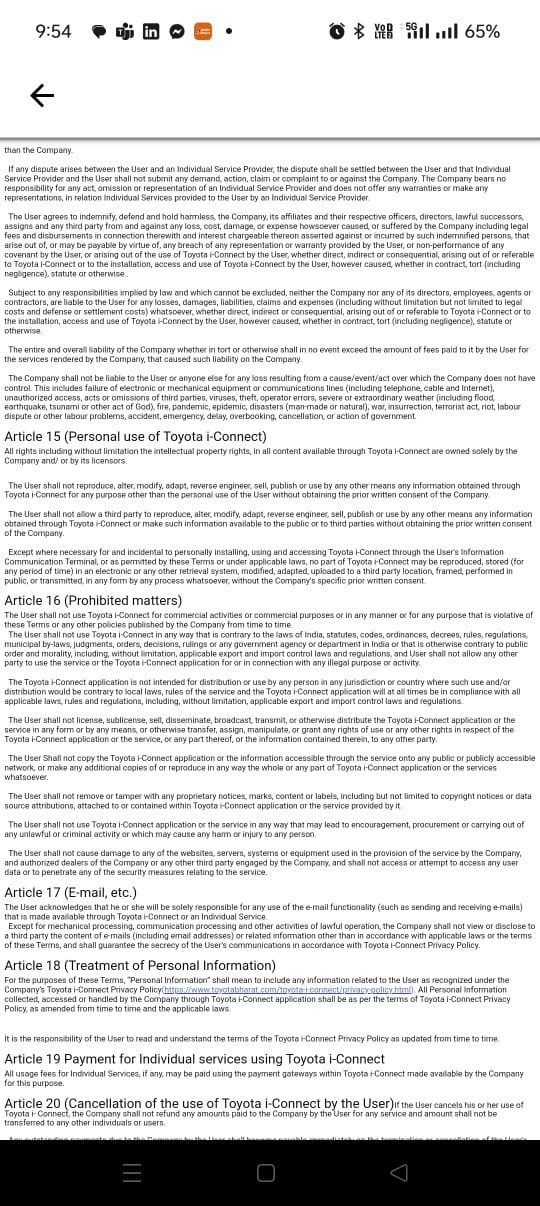
My recent purchase of a Toyota brand, a fantastic hybrid car, came with a rude awakening – the app. This app promises a range of connected services, enhancing the driving experience with features like real-time navigation, vehicle diagnostics, and remote control capabilities. However, beneath these conveniences lies a troubling truth about data privacy. Upon closer inspection of the Toyota I Connect app's privacy policy in India, my concern morphed into outrage. The sheer amount of personal and driving data being captured – from location and speed to acceleration patterns – left me aghast.
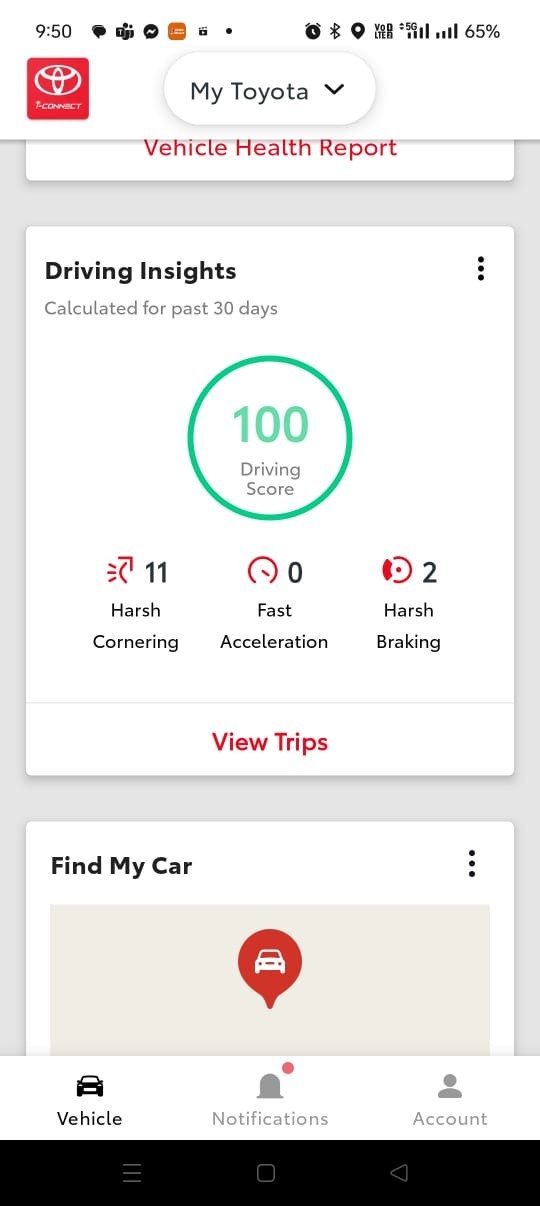
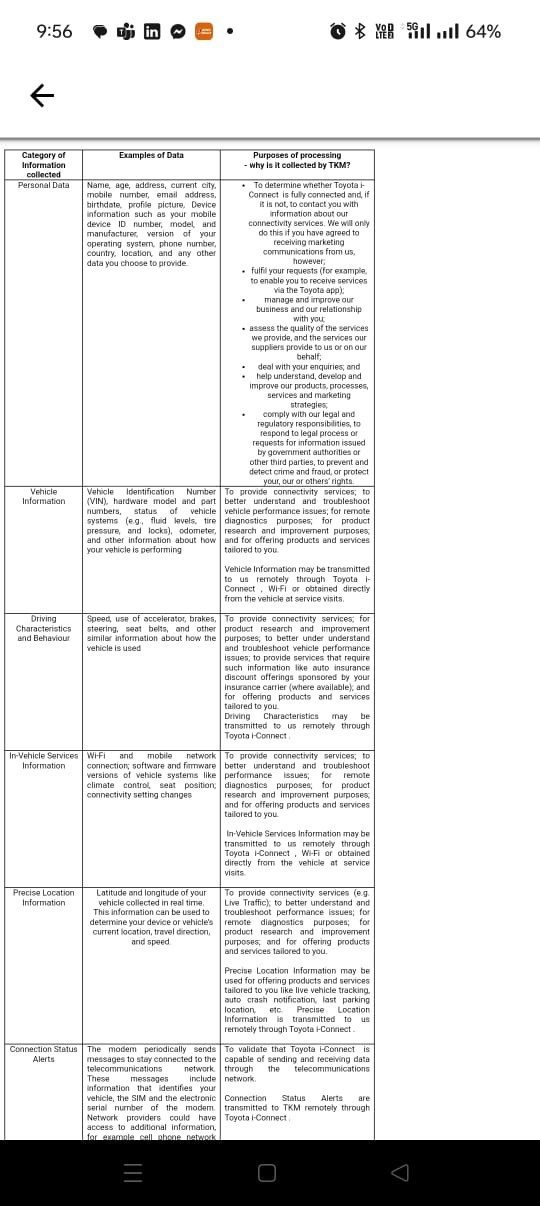
The app's privacy policy reveals that Toyota is collecting highly sensitive information including:
🔴 Detailed driving behaviour data (acceleration, braking, steering)
🔴 Precise real-time location tracking
🔴 Vehicle diagnostic information
🔴 Personal data like name, contact info, and demographic details and much more
Even more concerning, Toyota states they can share or sell this data to a wide range of third parties including:
🔴 Toyota affiliates and partners globally
🔴 Advertising/marketing companies
🔴 Data brokers and analytics firms
🔴 Insurance companies
This network of data sharing extends far beyond what most consumers would reasonably expect or consent to.
The more I read the Privacy Policy the more fear seeped in me .As an example :

𝑺𝒕𝒓𝒂𝒏𝒈𝒆; 𝒇𝒐𝒓 𝒂𝒏𝒚 𝒊𝒍𝒍𝒆𝒈𝒂𝒍 𝒂𝒄𝒕𝒊𝒗𝒊𝒕𝒚, 𝑻𝑲𝑴 𝒘𝒊𝒍𝒍 𝒖𝒔𝒆 𝒎𝒚 𝒅𝒂𝒕𝒂

𝑺𝒐, 𝒅𝒐𝒏’𝒕 𝒃𝒆 𝒔𝒖𝒓𝒑𝒓𝒊𝒔𝒆𝒅 𝒊𝒇 𝒚𝒐𝒖 𝒔𝒕𝒂𝒓𝒕 𝒔𝒆𝒆𝒊𝒏𝒈 𝒂𝒅𝒔 𝒐𝒏 𝒕𝒉𝒆𝒔𝒆 𝒂𝒑𝒑𝒔 𝒂𝒏𝒅 𝒕𝒉𝒆𝒚 𝒃𝒆𝒄𝒐𝒎𝒆 𝒂 𝑹𝒆𝒕𝒂𝒊𝒍 𝑴𝒆𝒅𝒊𝒂 𝒐𝒇 𝒔𝒐𝒓𝒕𝒔

‘’𝐀𝐭 𝐲𝐨𝐮𝐫 𝐨𝐰𝐧 𝐫𝐢𝐬𝐤’’.

𝐌𝐲 𝐃𝐚𝐭𝐚 𝐜𝐚𝐧 𝐛𝐞 𝐭𝐫𝐚𝐧𝐬𝐟𝐞𝐫𝐫𝐞𝐝 𝐚𝐧𝐲𝐰𝐡𝐞𝐫𝐞 𝐚𝐧𝐝 𝐭𝐨 𝐚𝐧𝐲𝐛𝐨𝐝𝐲!
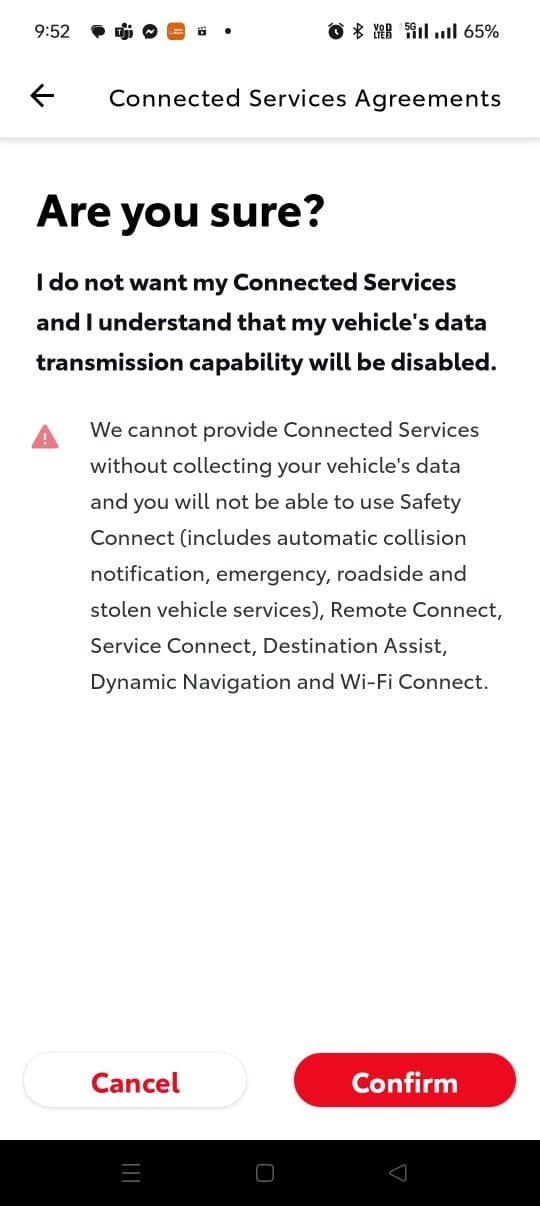
I only have one choice :
🔲 𝐄𝐢𝐭𝐡𝐞𝐫 𝐬𝐡𝐚𝐫𝐞 𝐲𝐨𝐮𝐫 𝐝𝐚𝐭𝐚 𝐚𝐧𝐝 𝐥𝐨𝐬𝐞 𝐲𝐨𝐮𝐫 𝐜𝐨𝐧𝐭𝐫𝐨𝐥 𝐨𝐯𝐞𝐫 𝐲𝐨𝐮𝐫 𝐨𝐰𝐧 𝐝𝐚𝐭𝐚 𝐭𝐨 𝐮𝐬𝐞 𝐭𝐡𝐞 𝐜𝐨𝐧𝐧𝐞𝐜𝐭𝐞𝐝 𝐚𝐩𝐩 𝐨𝐫
🔲 𝐝𝐨𝐧’𝐭 𝐮𝐬𝐞 𝐭𝐡𝐞 𝐚𝐩𝐩 𝐚𝐭 𝐚𝐥𝐥
There are many such glaring gaps and I can’t put all of them here. But hope you all get the drift!
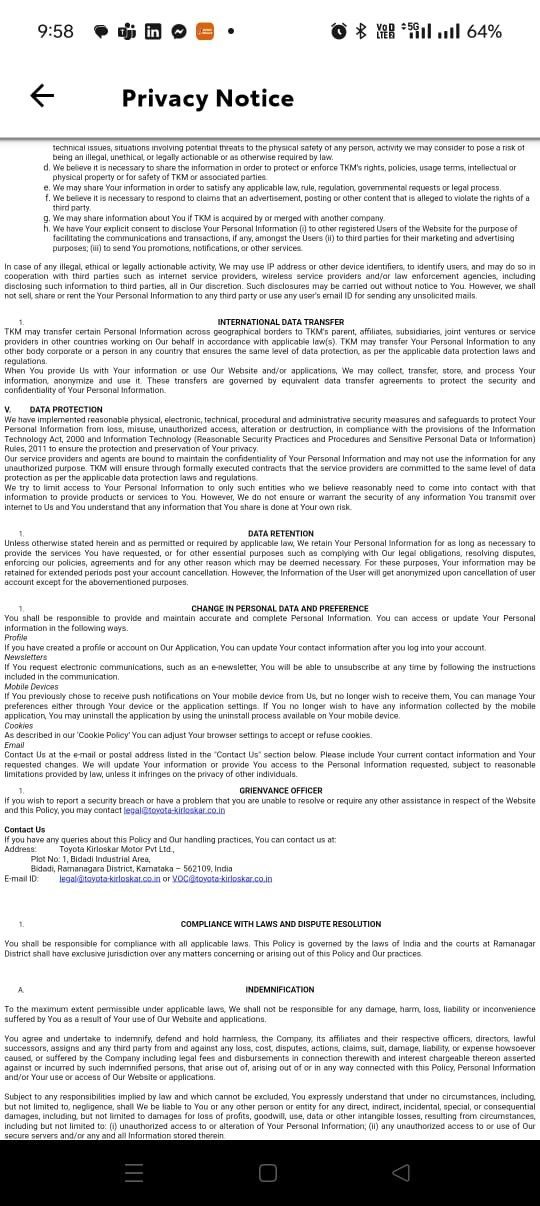
As a privacy professional or even a consumer , I find these practices deeply problematic:
1. Lack of transparency - The full scope of data collection is buried in dense legalese most consumers won't read or understand. They fail to provide a clear picture of what data is being collected, for what purpose, and with whom it's being shared. This lack of transparency breeds distrust and undermines user control.
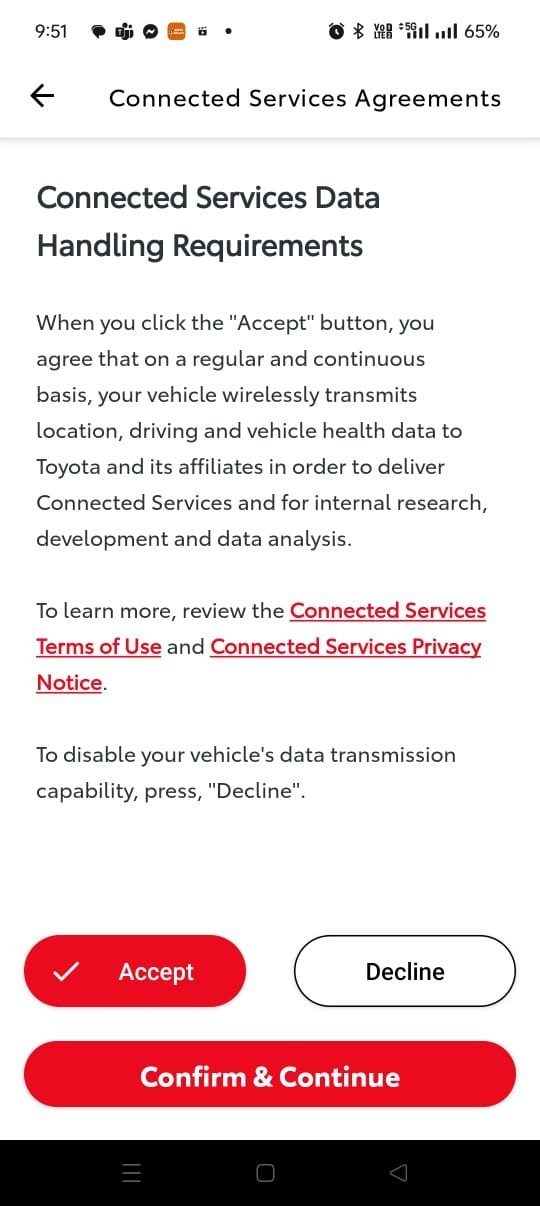
In my attempt to protect my privacy, I sought ways to selectively opt out of certain data collections. To my dismay, the Toyota I Connect app does not offer any granular control over what data is shared. This blanket data capture without meaningful consent options is a direct violation of basic privacy principles.
2. Excessive data harvesting - Toyota is amassing far more personal information than needed to provide basic connected services.
3. Inadequate consent - Users can't selectively opt-out of specific data collection or sharing. It's all or nothing.
4. Potential for misuse - This treasure trove of personal data could be exploited for surveillance, profiling, or discriminatory practices.
5. Security risks - Centralizing so much sensitive data creates an attractive target for hackers and data breaches.
Why This Matters
Privacy is a fundamental right, and its erosion in the name of technological advancement sets a dangerous precedent. Consumers deserve transparency and control over their personal data. The current practices of many auto manufacturers, including Toyota, are not only privacy non-compliant but also erode consumer trust.
What truly infuriated me was the lack of granular control over data sharing. The option to opt-out is a checkbox for "all or nothing," a blatant disregard for user autonomy. This raises serious questions about compliance with data privacy regulations like India's DPDP.
This isn't just about Toyota. It's a systemic issue plaguing the auto industry. We, as consumers, deserve better. We deserve the right to choose what data our cars collect and with whom it's shared.
How Car Data is Exploited in America [1]
It's even more rampant in US where these data are shared with the Insurance players. There is a collusion between automakers and insurance companies using data collected from unsuspecting car owners to raise their insurance rates.
Modern cars are internet-enabled, allowing access to services like navigation, roadside assistance and car apps that drivers can connect to their vehicles to locate them or unlock them remotely. In recent years, automakers, including General Motors Honda Cars India Ltd , Kia India and Hyundai Motor Company (현대자동차) , have started offering optional features in their connected-car apps that rate people’s driving. Some drivers may not realize that, if they turn on these features, the car companies then give information about how they drive to data brokers like LexisNexis.
Automakers and data brokers that have partnered to collect detailed driving data from millions of Americans say they have drivers’ permission to do so. But the existence of these partnerships is nearly invisible to drivers, whose consent is obtained in fine print and murky privacy policies that few read. There is no warning or prominent disclosure that any third party would get access to my driving data.
The auto industry urgently needs stronger regulation and ethical standards around data practices.
To Auto Manufacturers:
✅ Rethink your data collection practices. Focus on transparency and user control.
✅ Offer granular opt-out options and clear explanations for data collection purposes.
✅ Users should have the ability to opt out of specific data collection practices without losing access to essential app functionalities.
✅ Invest in robust data security measures.
✅ Data minimization - collecting only what's necessary. The app collects detailed information about the driver and the vehicle, far beyond what is necessary for the app’s functionality
✅ Data should only be shared with third parties when absolutely necessary, and with explicit consent from the user.
Now , I know why I got almost 20-30 calls from brokers, insurance DSAs sand so many SPAM callers for my insurance when I never went online or left my details for insurance renewal on any sites/app. This was known only to Toyota. The data might have got leaked.
To Regulatory Bodies:
✅ Strengthen data privacy regulations for the connected car industry.
✅ Ensure clear guidelines for data collection, storage, and sharing.
✅ Empower users with robust enforcement mechanisms.
To Consumers - Educate yourselves :
✅ Understand what data your car is collecting and how it's being used.
✅ Demand data privacy from car manufacturers.
✅ Don't be afraid to raise your voice – your privacy matters.
✅ Ask why you cannot use the app with more granular opt in/out
I call on Toyota Motor Corporation and all automakers to put privacy first and give consumers meaningful control over their personal information. Our cars shouldn't be privacy-invading data mines on wheels.
Remember, our trust is not a given, it's earned.
The future of connected cars is bright, but only if built on a foundation of trust and transparency. It's time for the auto industry to shift gears and put user privacy at the forefront. It's time we take back control of the data our cars generate.
Let's not allow ourselves to be passengers on a ride towards a privacy dystopia.
Anil Pandit
Executive Vice President
Publicis Media
*Disclaimer: This post is for informational purposes only and does not endorse or disapprove of any specific tools, platforms, or technologies. The views and opinions expressed in this article are those of the author and do not reflect the official policy or position of the company he is employed in.
[1]Source : https://www.nytimes.com/2024/03/11/technology/carmakers-driver-tracking-insurance.html
FROM THE AUTHOR’S ARCHIVE
Original text from Anil Pandit’s article export. Claims and references reflect the time of writing.
View on LinkedIn ↗What does this mean for your business?
Bring the question into a focused advisory conversation.
Work with Anil ↗